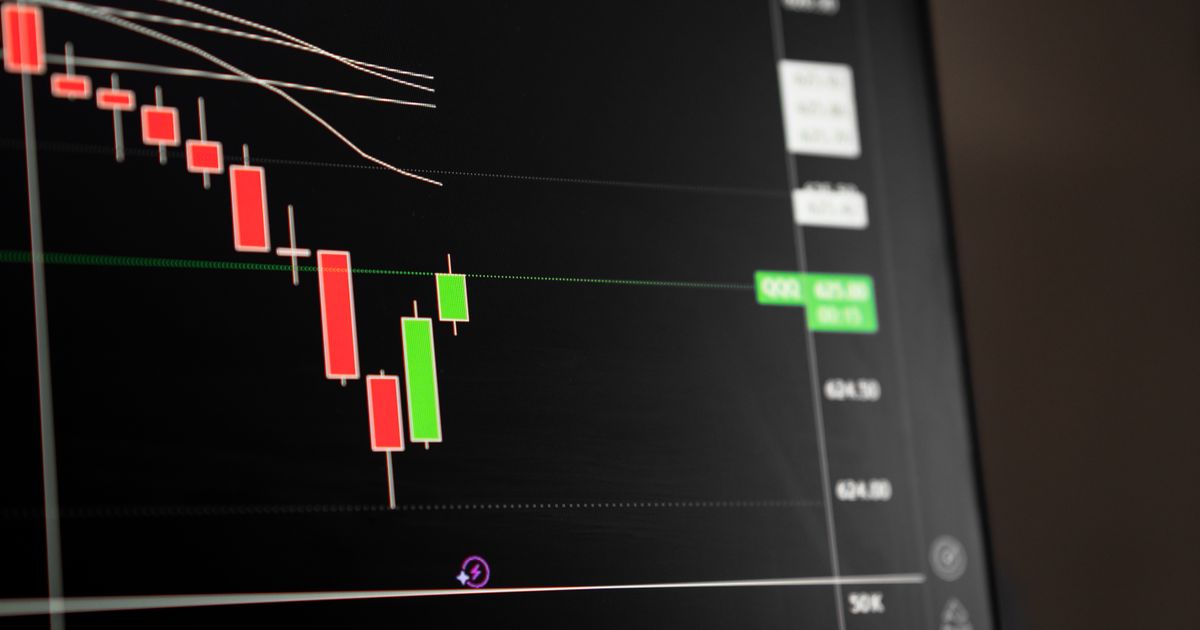
Photo by Alex Luna on Pexels
Swing Trading: What It Is, How It Works, and Who It Suits
Published June 24, 2026 · Last updated June 24, 2026
Swing trading is the style that sounds like it was named by someone who played jazz in the 1940s. It wasn't — but if you found this page expecting something else, you are welcome to stay. The charts are less interesting than Chet Baker, but the arithmetic is better.
You have probably read a swing trading guide before. It covered time frames, moving averages, RSI levels, and the difference between swing trading and day trading. This one covers the part those guides leave out: why swing trading works at all, what actually happens in the market that creates the swings retail traders try to capture, and why the standard indicator approach to entering those swings is the reason most traders who understand the concept still lose money applying it.
My apprentice asked me once whether he should swing trade or day trade. I told him the answer depended on what he could actually do consistently. He interpreted this as permission to scalp. (It was not permission to scalp.) He eventually settled on H4 swing trading, which suits his temperament, his schedule, and his risk tolerance considerably better. His account agreed.
The Short Answer
Swing trading means holding positions for 2–5 days (sometimes longer), using the H4 or daily timeframe for analysis and entry. A swing trader identifies a directional bias, waits for price to return to a structural level, enters on confirmation, and holds until the target is reached or the trade is invalidated. It is the most compatible trading style with a full-time job. The reason most swing traders fail is not the time frame — it is entering on lagging indicator signals at moments when the institutional move has already begun.
What swing trading actually is
Swing trading means holding positions for 2–5 days, sometimes up to several weeks. Analysis happens on the H4 or daily chart. The entry is triggered by a confirmation signal at a structural level. The stop loss sits beyond the level that invalidates the trade. The target is the next significant structural level.
The defining feature is what a swing trader does between placing the trade and closing it: not very much. The trade is set up, the risk is defined, and the position is left to work. This is not laziness — it is the mechanical advantage of trading on a timeframe where the intraday noise is irrelevant to the thesis.
The practical consequence is that swing trading is compatible with a full-time job in a way that day trading is not. Decisions are made in the evening. The platform is checked once or twice a day. The trade either reaches its target or its stop, and the result is reviewed at the trader's convenience. The daily chart does not care what you were doing between 07:00 and 17:00.
Why swing trading works — the institutional logic
Most guides tell you swing trading works because it “captures price swings between highs and lows.” That is a description, not an explanation. The question worth asking is: why do the swings happen at all?
Institutions — banks, funds, large commercial players — cannot fill large positions instantly. A $100 million sell order cannot be executed in one transaction without moving the market significantly against the seller. So institutions build and unwind positions over time, across multiple sessions. They accumulate at one level, distribute at another, and the price movement between those two levels is what retail traders call “the swing.”
This means that what looks like random price movement between two points is, in practice, the market moving from one institutional activity zone to the next. The swing is not arbitrary. It is the distance between where institutional accumulation occurred and where distribution is likely to occur. Understanding how institutional order flow moves price is what separates swing traders who consistently read these moves from those who get the direction right but enter at the wrong moment and get stopped out before the move happens.
This is also why the standard indicator approach to swing trading fails more often than it should. RSI at 70 signals “overbought” at the moment every retail trader watching the same video gets the same signal. At that moment, the institutional participant who has been distributing into the move for two sessions is already substantially done. The retail signal fires; the institutional move is nearly complete. The entry is in the right direction, the timing is wrong, and the result is: “my analysis was right but I still lost.”
How to enter a swing trade
A structurally sound swing trade entry has three components: a higher timeframe direction, a structural level to enter at, and a trigger.
1. Higher timeframe direction. Before looking for an entry, the swing trader establishes the bias on the daily chart. Is price making higher highs and higher lows (bullish), lower highs and lower lows (bearish), or is it ranging without directional conviction? Swing entries in the direction of the higher timeframe trend have more structural support than counter-trend entries. Trading against the trend produces a slowly bleeding account on most timeframes.
2. Structural level. Within the higher timeframe direction, price will pull back. The swing trader's job is to identify where that pull-back is likely to find support — not because an indicator says so, but because the level has structural significance: a prior swing high that became support, a supply or demand zone where an impulsive move originated, or a range that held for multiple sessions. These are the levels where institutional interest is likely to return.
3. Trigger. Price reaching a structural level is not itself an entry signal. The swing trader waits for confirmation that the level is holding: a pin bar rejection, an engulfing candle, a break of a lower timeframe high or low within the zone. This is the price action trigger. It is the evidence that the level is active, not just approximate.
The stop loss sits beyond the structural level that invalidates the trade — if price moves through that level, the original thesis is wrong and the trade should not be held. The target is the next structural level on the higher timeframe. The RR should be at minimum 1:2 before entering; many high-quality swing setups offer 1:3 or higher when the structural distance between entry zone and target is properly assessed.

Photo by Joshua Mayo on Pexels
Managing an open swing trade
Most of what swing traders call “active trade management” is actually interference. The trade was placed because of a structural thesis. The stop is set where the thesis is invalidated. Anything that happens between entry and target that does not break the structural thesis is noise.
The one adjustment that has structural logic is moving the stop to B/E (breakeven) once price has moved a meaningful distance in the direction of the trade. A common approach: once price has moved one risk unit in the right direction, move the stop to the entry price. This eliminates the possibility of a losing trade from a position that was once in profit, without compromising the target.
What undermines most swing trades is not bad entries — it is the inability to hold through the normal retracement that occurs after entry. Price rarely moves in a straight line from entry to target. A bullish swing trade on GBP/USD will have sessions that close red, intraday dips that look alarming, and moments where closing early feels rational. The structural read says the level held. The thesis is intact. Closing early is the trade management error, not the trade itself.
The ability to hold through that noise is not psychological toughness — it is knowing with confidence why the trade is valid. Traders who manage trades by feel rather than by structural logic will close early when the trade is working and hold too long when it is not. The solution is not better psychology. It is a clearer structural thesis before the trade is placed.
Swing trading forex specifically
Forex swing trading has three characteristics that make it particularly suited to this style.
Session structure. Forex operates in identifiable sessions — London (07:00–16:00 GMT), New York (12:00–21:00 GMT), Asian (23:00–08:00 GMT). The major institutional moves happen during London and the London-New York overlap. A swing trade entered on the daily chart after London close captures the next day's institutional session without requiring the trader to be present for it. This is structurally different from trading equities or futures, where session timing creates different constraints.
Pair selection. Not every currency pair suits swing trading equally. Major pairs (EUR/USD, GBP/USD, USD/JPY) have the deepest institutional participation and the most reliable structural levels. Exotic pairs have wider spreads, thinner liquidity, and less predictable institutional behaviour. For a swing trader developing their structural read, one major pair is more educational than five exotic ones. The specific forex swing trading setups that work on majors are documented separately.
Overnight risk. Forex markets close Friday at 22:00 GMT and reopen Sunday at 22:00 GMT. A position held into the weekend carries gap risk — the price can open significantly different from where it closed. Position sizing for swing trades should account for this. The full forex risk management framework covers how to size positions so that overnight and weekend gaps are survivable.
Swing trading patterns and setups
The most reliable swing trading pattern is not a shape on a chart — it is a set of conditions. Specifically: higher timeframe direction confirmed, price pulled back to a structural level, confirmation trigger visible at that level. The shape the confirmation takes is secondary. The three most common confirmation signals:
- Pin bar (hammer / shooting star). A candle with a long wick rejecting a level and a small body showing that the initial move was absorbed. In a bullish swing setup, a hammer at a demand zone shows that sellers pushed into the zone and were rejected decisively. The high of the candle becomes the close-above trigger for entry confirmation.
- Engulfing candle. A bullish candle that fully covers the body of the prior bearish candle at a structural level. Signals that buyers absorbed the selling pressure and regained control. The most reliable engulfing setups occur at fresh demand zones, not at levels that have been tested multiple times.
- Lower timeframe structure break. On the H4, price arrives at a daily demand zone. Drop to the H1. If the H1 has been making lower highs and lower lows within the zone, wait for it to break a prior H1 high — that break signals the structural shift from bearish to bullish at the micro level, providing a higher-probability entry with a tighter stop. This is confluence: the daily structural level and the H1 direction change agree.

Photo by Firmbee.com on Pexels
Who should not swing trade
Swing trading is the right style for a lot of traders. It is not the right style for everyone. The FCA reports that 70–80% of retail traders lose money consistently — and that figure applies regardless of which style they use. The style is not the problem. Here is who should pause before deciding swing trading is the answer:
If you cannot hold a position overnight without checking it repeatedly. Swing trading requires genuine indifference to intraday price movement once the stop and target are set. If an open position is psychologically intrusive during the working day, the trade management decisions that follow will be driven by anxiety rather than structure. The result is closing the trade early, moving the stop, or adding to a losing position — none of which have structural justification.
If you do not yet have a structural read of the higher timeframe. Swing trading entries are only as good as the structural context they are placed in. An entry at a “support level” that is actually the middle of a range, or a trend pull-back entry when the trend on the daily chart has already turned, will produce losses regardless of how clean the trigger looks. Learning to read why price is at a particular level — what institutional behaviour created the zone — is the prerequisite. The forex market moves $7.5 trillion daily. Understanding what is moving that volume, rather than just identifying shapes on the chart, is the structural read swing trading requires.
If you are trying to swing trade your way out of losses from another style. Changing styles after a losing run is one of the most common and expensive moves in retail trading. “I'll switch to swing trading because it's calmer” is not a structural decision — it is a reaction to losses. The swing trading losses that follow are not the fault of the style. The issue is that the structural read has not changed; only the time frame has.
Frequently asked questions
What is swing trading?
Swing trading means holding positions for 2–5 days (sometimes longer), using the H4 or daily chart for analysis. A swing trader identifies a directional bias, waits for price to pull back to a structural level, enters on confirmation, and holds until the target or stop is hit. It is the most compatible style with a full-time job because decisions can be made outside market hours.
How does swing trading work?
Swing trading works by capturing the move between a structural level where price is likely to continue in the higher timeframe direction and the next structural level where it is likely to pause or reverse. The entry is at the structural level; the confirmation is a price action trigger showing that level is active; the stop is beyond the level that invalidates the trade; the target is the next structural high or low on the higher timeframe.
Is swing trading profitable?
Swing trading can be profitable with positive expectancy over a meaningful sample of trades. Most swing traders who fail do not fail because the approach doesn't work — they fail because they enter on lagging indicator signals rather than at structural levels, or trade against the higher timeframe direction without realising it. The framework works; the structural read is what takes time to develop.
What is the difference between swing trading and day trading?
Day traders open and close all positions within a single session. Swing traders hold for 2–5 days or longer, accepting overnight and weekend risk in exchange for targeting larger moves. Day trading requires availability during market hours; swing trading decisions can be made in the evening. The stop and target in swing trading are set at higher timeframe structural levels, making them larger in pip terms but proportionally smaller relative to the target.
What are the best swing trading strategies?
The most structurally sound swing setups are: trend pull-back entries (higher timeframe direction established, entry at a structural level within the trend) and range reversal entries (clearly bounded range, entry at supply or demand zone with price action confirmation). Both require entry at a level with structural significance — not just where an indicator fires.
What indicators should I use for swing trading?
RSI, MACD, and moving average crossovers are lagging — they signal after the institutional move has already begun. The tools with more structural validity: supply and demand zones on the H4 or daily chart, price action confirmation signals at those zones, and the higher timeframe trend direction. Confluence between the daily zone and the H4 or H1 confirmation signal is more reliable than any single indicator.
How much capital do I need to swing trade forex?
There is no fixed minimum, but the practical constraint is sizing correctly. If your stop is 30 pips and your account is £1,000, risking 1% means a £10 risk budget — the position size will be very small but manageable. The key is never risking more than 1–2% per trade, regardless of account size. Swing trading with insufficient capital amplifies the temptation to overtrade or over-leverage.
Marco has been trading swing setups from London since 2009. He is, according to his wife, considerably more reliable at reading the H4 structure than at predicting what time dinner is. The H4 has not yet filed a complaint.
Start Seeing What's Really Moving Price
Most traders react to price. Learn to read what drives it.
See how Rethink Forex works