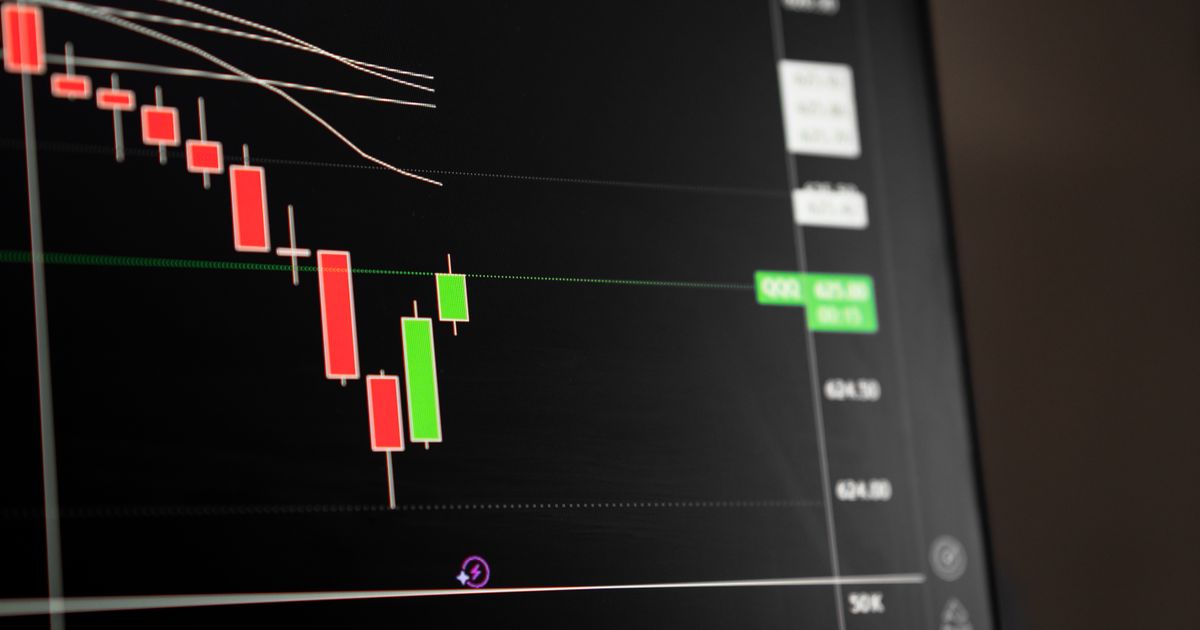
Photo by Alex Luna on Pexels
Candlestick Formations in Forex: The Honest Guide
Published June 16, 2026 · Last updated June 16, 2026
A trader can memorise every candlestick formation in forex ever documented. He can have the chart laminated. Framed. Taped to his monitor at eye level. The market will remain completely indifferent to his preparation.
(My apprentice, on hearing this, said “that sounds like personal experience.” He was not wrong. The laminated chart is in a drawer somewhere. Several drawers, technically. It was a phase.)
You have probably already read about candlestick formations. Maybe from a free PDF. Maybe from the YouTube channel you trusted before the results stopped adding up. Maybe from the paid course that taught you to pull the trigger on every hammer you found and quietly left out the part where most of them fail. If you are thinking “I already know this” — you know the shapes. This is about why the shapes work where they do and mean nothing where they don't. That part is almost never taught.
Here is what most candlestick guides do not tell you: the pattern is not the signal. The location is the signal. A hammer at a key demand zone after a sustained downward move is a meaningful piece of evidence. The same hammer floating in the middle of a range during a quiet Tuesday afternoon session is noise wearing a costume. Nobody explains which is which. This guide does.
Quick Answer
Candlestick formations in forex show what price did during a session — open, close, high, and low — not what it will do next. They become useful when they appear at significant price levels: supply zones, demand zones, or order blocks. Away from those levels, the same formations are unreliable. The pattern records institutional activity. The location is what tells you whether that activity matters.
What a candlestick actually shows
Before getting into formations and forex patterns, it is worth understanding what a single candle is actually recording, because this is where most retail education quietly goes wrong.
A candlestick has four data points: the price at which that session opened, the price at which it closed, the highest price reached, and the lowest price reached. The body of the candle is the distance between open and close. The wicks — the thin lines above and below the body — are the distance between the body and the session extremes.
A long lower wick means price was pushed down significantly at some point during the session and then recovered. That recovery happened because buyers — enough of them, with enough volume — stepped in and moved price back up. The wick is not a random artefact. It is a record of a rejection. Someone, somewhere, decided that level was too cheap and bought heavily enough to reverse the move.
A long upper wick is the opposite: price was pushed up, sellers appeared, and price came back down. Again, not random. Somebody found that level expensive and sold.
This is the foundation of everything that follows. Candlestick formations in forex are not predictive in themselves — they are a record of who was active and where. The predictive value comes from knowing whether the level at which that activity occurred is structurally significant. And that knowledge has to come before the pattern does.
The formations retail traders memorise — and why they often fail
You have probably been here. Someone gave you a chart — 16 patterns, maybe 32, maybe a laminated poster — and told you to memorise which ones are bullish and which are bearish. You did. You went to your charts, found the patterns, and tried to pull the trigger. Some worked. Most didn't. And the ones that didn't weren't close losses — they were the kind that made you wonder whether the whole approach was built on sand. “My analysis was right but I still lost.” Rinse, repeat. Account bleeding slowly while the patterns kept forming exactly as advertised.
The issue is not that you did anything wrong. Nobody told you that memorising patterns was the wrong starting point. They handed you the pattern, told you what it “means,” and skipped the part where the structural context around it determines whether it means anything at all.
Academic research on trading patterns has consistently found that candlestick formations applied without additional context — no support/resistance, no session timing, no volume — produce results only marginally better than random across a large sample of trades. Not useless. Just insufficient alone.
The retail trader who memorises hammers and shooting stars but has not yet learned to identify where in the price structure those patterns appear is using half a tool. The other half — the structural context — is what the guides always save for the advanced section. It should be the first section.
The traders who say “I basically set my money on fire, would have been quicker” are not wrong about what happened to their account. They are wrong about why it happened. It was not the patterns. It was the absence of the framework that makes patterns useful. That is not your fault. You were not taught the framework. You were taught the shapes.
And yes — if you are reading this thinking “is this just another funnel to something expensive” — fair question. This post is not going to end with a £2,000 course. It is going to end with what you actually need to know to make candlestick formations useful. That is the only agenda here.

Photo by RDNE Stock project on Pexels
The part nobody explains: location is the signal, not the candle
Here is the distinction that changes how you read a chart.
A hammer at a demand zone — a level where price previously reversed and where institutional buyers have historically been active — carries genuine weight. Price reached a level that proved significant before. Sellers pushed it down into that zone. Buyers appeared and rejected the move. The long lower wick is evidence of that rejection. You now have: a structurally significant level, confirmed by prior behaviour, with a current candle showing real-time rejection. That is confluence. That is a trade with a reason.
The same hammer, 80 pips above that zone, in the middle of a choppy consolidation range with no structural significance, tells you nothing except that sellers moved price down during the session and buyers brought it back. This happens constantly. It is not a signal. It is activity.
The price action strategy that works is not “find the pattern, enter the trade.” It is “find the level, wait for the pattern to confirm it.” Those two sequences look identical on the chart and produce completely different results over time.
This is why experienced traders who use candlestick analysis can look at the same chart as a newer trader, see the same hammer, and reach opposite conclusions about whether it represents a tradeable opportunity. They are not seeing different patterns. They are seeing different contexts.
Identifying those levels precisely — what makes a demand zone hold, what makes a supply zone act as a ceiling — is the subject of supply and demand trading. Get that understanding first. The candlestick formations come after.
How institutional order flow creates the formations you read
This is the part that reframes everything — and it is also the part most retail education carefully avoids, because once you understand it, a large proportion of standard pattern-trading advice becomes obviously backwards.
A bullish engulfing candle does not appear because the market decided it was time to go up. It appears because institutional buyers — banks, funds, large market participants operating with significant volume — placed their orders at a specific level. Those orders absorbed the selling pressure, reversed the direction of price during the session, and closed price strongly above the opening level.
The candle is a record of what they did. By the time the candle closes and the retail trader sees the pattern and considers entering, the institutional position is already established. The professionals who created the formation are in. You are entering where they finished.
Here is what that means for the reader who has been told — or has begun to suspect — that the market is random, rigged, or fundamentally unknowable. It is none of those things. The market has structure. Institutional participants accumulate at the same types of levels, in the same types of conditions, with the same types of candle signatures, because their behaviour is driven by logic: buy where previous supply was absorbed, sell where previous demand was exhausted. That logic repeats. The candle formations at those levels repeat. This is not a guess — it is the most consistent thing about forex price behaviour. Once you can see the logic beneath the formations, the chart stops looking like chaos and starts looking like a record of decisions. Readable decisions.
This is not a conspiracy. It is mechanics. Understanding order flow in forex makes clear why certain candle formations appear at certain levels with predictable regularity — institutional participants accumulate and distribute at specific structural zones, and the candles record that activity every time. The pattern is real. The edge comes from knowing where to expect it, not from reacting to it after it has already formed.
This also explains stop hunts. A long lower wick on a candle that appears just below a well-known support level is often not a genuine buyer stepping in — it is a deliberate engineered move to trigger stop-loss orders sitting below that level. The wick hunts the stops, fills the institutional orders at a better price, and reverses. The retail trader who placed their stop just below support got taken out. The pattern looks like a hammer. It is not a buy signal. It is the aftermath of someone else's order being filled.
Bullish formations — what they are actually showing
The hammer
Small body at the top, long lower wick. Appears after a downward move. It's hammer time — which unfortunately does not mean what MC Hammer intended, but it does mean that sellers drove price significantly lower during the session and buyers rejected that move completely. At a demand zone, this rejection carries real weight. It shows institutional buyers were active at that level. Away from a meaningful level, the hammer is a common candle that tells you sellers were present and then buyers were present. This happens constantly and is not tradeable on its own.
The bullish engulfing
A bearish candle followed by a larger bullish candle that opens below the prior close and closes above the prior open. The second candle “engulfs” the first. At a demand zone or order block, this pattern shows that selling pressure was met with a stronger institutional buying response — not just a pause, but an active takeover of price direction. This is one of the more reliable formations because the two-candle sequence requires sustained institutional commitment to produce.
The morning star
A three-candle pattern: a strong bearish candle, followed by a small-bodied indecision candle (often a doji), followed by a strong bullish candle. The sequence shows a transition from seller control to buyer control, with a visible pause in the middle where neither side dominated. At a significant structural low, this is a credible sign of reversal. It requires three candles to confirm, which means it develops slowly and gives a clearer signal — but also means the entry point is often less favourable by the time it is confirmed.
Bearish formations — what they are actually showing

Photo by AlphaTradeZone on Pexels
The shooting star
The mirror image of the hammer: small body at the bottom, long upper wick. Appears after an upward move. Buyers pushed price significantly higher during the session; sellers rejected that move and closed price back near the open. The long upper wick is the record of a supply-side response at that level. At a supply zone or significant resistance level, this is meaningful — institutional sellers were active and rejected the higher price. In the middle of a range, the shooting star is unremarkable.
The bearish engulfing
A bullish candle followed by a larger bearish candle that opens above the prior close and closes below the prior open. Sellers not only matched buyers — they overwhelmed them. At a supply zone after an upward move, this pattern shows institutional selling pressure arriving in volume. As with its bullish counterpart, the two-candle commitment required makes it a more substantive signal than a single-candle formation.
The pin bar
A candle with a very long wick — either direction — and a small body. The wick shows a sharp rejection of a price level within the session. Pin bars are often cited as one of the clearest price action patterns in forex. That is true at the right level. A pin bar that forms precisely at a previously tested supply or demand zone, rejecting a level cleanly, with the wick pointing away from the zone, is a strong visual confirmation of that level's significance. A pin bar in the middle of a trend, in low volume, away from structure, is a coincidence of candle anatomy. The bar shape did not create the signal. The level did.
The candles that mean almost nothing without location
The doji
Open and close are almost identical, producing a candle with a near-invisible body and wicks on both sides. The doji represents indecision. Neither buyers nor sellers won the session. (It is also, for what it is worth, a Japanese word — and technically the most aesthetically interesting candle on any chart, which is not the same as the most useful.)
At a significant structural level after a strong directional move, a doji can indicate exhaustion — the move is running out of momentum and the opposing side is beginning to appear. In the middle of a range, during the Asian session on a quiet pair, after no particular move, a doji tells you the session was quiet. That is all. Trading dojis without structural context is one of the most common reasons retail traders find candlestick analysis unreliable.
The inside bar
A candle whose entire range — high to low — sits within the range of the preceding candle. It shows consolidation: the market paused and did not extend in either direction. Inside bars are often taught as breakout signals — trade the direction of the break once price exits the mother candle's range.
The problem: breaks of inside bars happen constantly and in both directions, many of which then reverse. An inside bar at a key structural level, following a clear impulse move, with the expected break direction aligned with the broader trend, is a reasonable setup. An inside bar in the middle of nowhere is simply a quiet candle. Context determines which is which, every time.
When not to trade a candlestick formation
This is the section most candlestick guides skip. It is also the section that would have saved most retail traders the most money.
When there is no structural level present
If you cannot clearly identify why the current price area is significant — a prior reversal, a zone of previous institutional activity, a major swing high or low — then a candlestick formation at that area is not a setup. It is a candle. Identify the structure first. If there is none, sit out.
During news events and economic releases
In the minutes around a major release — Non-Farm Payrolls, CPI, central bank decisions — candlestick formations are meaningless. Price can wick in both directions, trigger every indicator on the chart, and reverse without any of the usual structural logic applying. A hammer that forms during NFP volatility is not a demand rejection. It is the chart doing the equivalent of a washing machine spin cycle. Stand aside.
Outside the high-volume sessions
Candlestick formations carry more weight during the London and New York sessions, when institutional volume is highest. A formation on the lower-volume Asian session — particularly on pairs not involving JPY — is produced with less institutional participation and is therefore less reliable as a signal. Understanding when institutional volume is active is part of reading whether any given candle is worth acting on.
If you are new to reading structure
This is the most important one. If you cannot yet read a clean price structure — if you are not yet confident identifying where supply and demand zones sit, where price has made previous significant highs and lows, and what the broader directional bias of the market currently is — then candlestick formations are not the right place to start. The pattern is the last confirmation of a thesis you should already have. Build the thesis first.
When you are on tilt
Taking a candlestick setup because you need to get back to breakeven is not trading a setup. It is revenge trading with a candle as the justification. The setup may look identical to one you would take in a neutral state — same pattern, same level, same timeframe. The decision-making is not identical. When you are entering because you are down on the week and a hammer just formed and your gut says this is the one, that is not confluence. That is hope wearing a technical costume. The account that blew up after a string of losses was rarely ended by the losses themselves. It was ended by the larger position taken to make them back. Sit out. Come back tomorrow.
The FCA's data on retail trading losses consistently shows that the majority of retail traders lose money. What the data does not show is that a significant portion of those losses occur not from a shortage of patterns to trade, but from trading patterns without the structural context that makes them meaningful. More patterns is not the answer. Better understanding of where patterns matter is.
The Bank for International Settlements reported daily forex turnover of $7.5 trillion in the 2022 triennial survey. The participants driving that volume are not looking at hammers and dojis as standalone signals. They are operating within structural frameworks that retail education largely does not teach. Understanding the market at the level they operate is what changes the game. Not memorising more patterns.
Frequently asked questions
What are candlestick formations in forex?
Candlestick formations in forex are specific arrangements of one or more candles that traders use to read price behaviour. Each candle shows the open, close, high, and low of a session. A formation is a recognisable pattern — hammer, engulfing, doji, pin bar — that suggests a potential shift or continuation in price direction. The critical point most guides skip: the formation does not cause the move. It records what institutional participants were doing during that session. Context — the price level, the session, the structure around it — determines whether the pattern is meaningful or irrelevant.
Do candlestick patterns actually work in forex?
Candlestick patterns work when they appear at significant levels — supply zones, demand zones, order blocks, major support or resistance — with confirming context. Away from those levels, the same pattern is largely noise. Studies consistently show that candlestick patterns alone, applied without context, have win rates only slightly above random. The reason most retail traders find them unreliable is not the patterns themselves — it is that they were taught to trade the pattern without being taught to read the location first.
What is the most reliable candlestick pattern in forex?
No single candlestick pattern is reliably predictive on its own. The most useful patterns — hammer, bearish engulfing, morning star, pin bar — become meaningful only in context: at key structural levels, with volume or session confirmation, and without conflicting signals in the surrounding price action. The question "which pattern is most reliable?" is the wrong frame. The right question is: "at what location does this pattern carry the most weight?"
What does a hammer candlestick mean in forex?
A hammer is a candle with a small body at the top and a long lower wick, appearing after a downward move. The long wick shows that sellers pushed price down significantly during the session, but buyers rejected that move and closed price back near the open. At a demand zone or significant support level, this rejection matters — it suggests institutional buyers were active at that level. In the middle of a trend with no structural context, the same candle tells you almost nothing useful.
What is a doji candlestick in forex?
A doji forms when the open and close of a session are very close to the same price, producing a candle with a small or invisible body and wicks on both sides. It represents indecision — neither buyers nor sellers were able to push price decisively in either direction. At a major level after a strong directional move, a doji can signal exhaustion. In the middle of a range or a choppy session with no structural significance, a doji is simply noise. Context is everything.
What is an engulfing candle in forex?
An engulfing candle is a two-candle pattern where the second candle completely covers the body of the first. A bullish engulfing forms when a bearish candle is followed by a larger bullish candle that opens below the previous close and closes above the previous open — suggesting a shift in control from sellers to buyers. A bearish engulfing is the reverse. At a significant structural level with momentum confirmation, engulfing patterns are among the clearer signs that institutional order flow has shifted. Away from those levels, they are common and mostly meaningless.
How do I use candlestick patterns with support and resistance?
The method is straightforward: identify the significant structural level first — a supply zone, demand zone, or order block — then wait for the candlestick pattern to form at that level. The pattern confirms that the level is being respected and that institutional activity is occurring there. Do not trade the pattern first and look for a level to justify it after. That sequence produces the pattern-without-context failure most retail traders experience. Level first, always. Pattern second.
What candlestick patterns should beginners learn first?
Before learning any specific pattern, understand the three things a candle always tells you: where price opened, where it closed, and where it was rejected. With that foundation, start with four formations: the hammer, the shooting star, the bullish engulfing, and the bearish engulfing. Learn these at significant price levels before adding more patterns. Adding more patterns before mastering context produces a chart full of signals and no clarity on what to act on.
Marco has traded forex from London since 2009. He spent a meaningful portion of his early years with laminated candlestick charts that did not survive contact with actual markets. He now coaches traders on reading structure before pattern — which is the lesson the laminated chart could not teach. He has been informed by his apprentice that “meaningful portion” is doing a lot of work in that sentence, and concedes the point.
Start Seeing What's Really Moving Price
Most traders react to price. Learn to read what drives it.
See how Rethink Forex works